
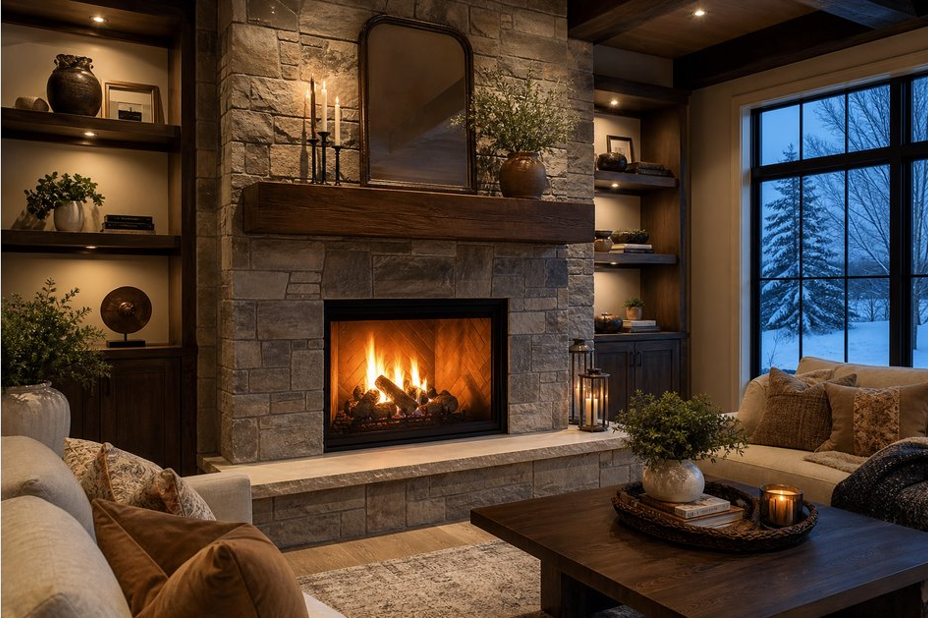
A fireplace can change the entire character of a home. It creates warmth, atmosphere, and a natural place to gather. For many Minnesota homeowners, it also becomes one of the most appreciated features during long winters when indoor comfort matters most.
But not all fireplaces are created equal. Gas, wood, and electric fireplaces each offer a different experience. They differ in installation requirements, maintenance, operating cost, heat output, ambiance, and long term convenience.
Choosing the wrong type can lead to disappointment. A homeowner who wants the ritual of a wood fire will never be fully satisfied with an electric unit. A household that values push button convenience may quickly tire of hauling logs and cleaning ash. A family seeking strong supplemental heat needs a different evaluation than one seeking occasional ambiance.
The right fireplace is the one that fits your home, lifestyle, and expectations. This guide explains how to choose between gas, wood, and electric fireplaces with clarity, so you can make a decision you will enjoy for years.
The Real Question Behind the Gas, Wood, and Electric Decision
Most homeowners begin by comparing appearance. That matters, but the first question should be function.
Do you want a fireplace primarily for heat, ambiance, or both? How often will you use it? Who will operate it? Are you remodeling an existing hearth or installing something new? Do you want indoor use only, or are you considering an outdoor fireplace as well? How much maintenance feels realistic for your household?
Once those questions are answered, fuel type comparisons become much easier.
A fireplace should fit the way you live, not just the way a room looks in a design photo.
Understanding Gas Fireplaces
Gas fireplaces are among the most popular choices in modern Minnesota homes because they combine strong visual impact with everyday convenience.
With a gas fireplace, you can enjoy flame at the push of a button or flip of a switch. There is no hauling wood, no ash cleanup, and no waiting for kindling to catch. Temperature and flame control are easier, which makes gas especially appealing for busy households.
Gas options range from traditional mantel fireplaces to contemporary linear units, inserts for existing openings, and double sided or see through configurations. Many modern gas fireplaces offer realistic log sets, glass media, and flame patterns that mimic the feel of wood burning far better than older models did.
Installation considerations are important. Venting requirements vary by system. Direct vent fireplaces are common in new construction and remodels where proper vent routing is possible. Gas inserts can upgrade older wood fireplaces while improving efficiency and ease of use. Gas line availability and local code requirements should always be reviewed by a qualified professional.
Gas fireplaces are often chosen by homeowners who want frequent use with minimal maintenance. They work especially well in primary living spaces where the fireplace is part of daily comfort rather than a special occasion feature.
The tradeoff is that gas systems require professional installation and periodic service. They also may not deliver the same sensory experience as a true wood fire for homeowners who value scent, crackle, and traditional hearth ritual.
Understanding Wood Burning Fireplaces
Wood fireplaces offer something gas and electric cannot fully replicate: authenticity.
The sound, scent, and movement of a real wood fire create an atmosphere many homeowners love. For cabins, traditional homes, and households that view the fireplace as a centerpiece of winter living, wood remains deeply appealing.
Wood burning fireplaces can be built as masonry installations, prefabricated units, or inserts within existing openings. They can anchor a formal living room, a rustic family space, or an outdoor entertaining area.
However, wood fireplaces require the most active involvement. Fuel must be stored and handled. Ash must be removed. Chimneys and flues need inspection and cleaning. Draft performance matters. Efficiency is often lower than modern gas or insert systems unless the unit is designed or upgraded for better performance.
Older wood fireplaces may need renovation to meet current expectations for safety, efficiency, and appearance. Many homeowners choose to rebuild surrounds, add inserts, upgrade dampers, or convert appearance while improving function.
Wood is often the best choice for homeowners who genuinely want the tradition and are willing to maintain it. It is a poor choice for someone who wants convenience but selects wood because it looks classic in photos.
Understanding Electric Fireplaces
Electric fireplaces have improved significantly and now occupy an important place in remodeling and supplemental heating strategies.
They are often easier to install because venting is not required in the same way as gas or wood. That makes them useful in condos, bedrooms, offices, basements, additions, and spaces where running gas lines or chimneys would be costly or impractical.
Electric units can be built into walls, set into mantels, or used as freestanding features. Many offer flame only settings for ambiance without heat, which adds flexibility in transitional seasons.
Electric fireplaces are typically best when the goal is visual warmth and supplemental comfort rather than primary heating. They appeal to homeowners who want style and simplicity with lower installation complexity.
They may not satisfy buyers or homeowners seeking a true hearth experience. Flame realism has improved, but electric units still feel different from gas or wood in both atmosphere and heat delivery.
For the right application, electric fireplaces can be a smart and cost effective solution.
Comparing Heat, Convenience, and Maintenance
Heat output varies significantly across fuel types and specific models.
Gas fireplaces can provide meaningful supplemental heat in living areas and are often used to create comfort zones during cold weather. Wood fireplaces can produce strong radiant heat, though efficiency depends on design, draft, and installation quality. Electric fireplaces generally provide supplemental heat suitable for smaller areas or occasional comfort rather than whole room heating.
Convenience strongly favors gas and electric over traditional wood. Gas wins for frequent indoor use with minimal effort. Electric wins for easy installation and simple operation. Wood requires the most ongoing involvement.
Maintenance also differs. Gas systems need periodic inspection and service. Electric systems are relatively low maintenance but should still be installed and used according to manufacturer guidance. Wood systems require chimney care, ash removal, and attention to creosote buildup and component wear.
Homeowners should choose based on how much involvement they truly want, not how much they imagine they want when standing in a showroom.
Which Fireplace Works Best in Different Home Situations
The best fuel type often depends on the project itself.
For a primary living room fireplace used often through Minnesota winters, gas is frequently the most practical choice. For a traditional home where the owner values wood burning ritual and is prepared to maintain the system, wood may be ideal. For a basement family room, bedroom sitting area, or remodel with limited venting options, electric may be the smartest fit.
Outdoor fireplaces introduce another layer of choice. Outdoor wood fireplaces create classic campfire like atmosphere. Outdoor gas fireplaces offer easier operation for entertaining spaces. Material durability and weather exposure should guide the design.
Remodeling an existing fireplace often narrows the options. A wood to gas conversion may be possible. An insert may dramatically improve performance without rebuilding the entire structure. Electric may be appropriate when the goal is visual upgrade with limited construction scope.
There is no universal best fireplace. There is only the best fireplace for your project.
Design Matters Whatever Fuel Type You Choose
Fuel type is only part of the decision.
Mantels, surrounds, stone, tile, proportion, cabinetry, and integration with the room all influence whether the fireplace feels like a premium feature or an afterthought.
A poorly scaled fireplace can dominate a room awkwardly. A too small unit can feel underwhelming in a large gathering space. Materials must suit heat exposure and the architectural style of the home.
The best results come when fuel selection and design planning happen together. A gas fireplace with a beautifully crafted surround can feel timeless. A wood fireplace with poor proportions can feel imposing. An electric fireplace integrated into custom built cabinetry can look far more upscale than a standalone unit plugged into an existing room without context.
Craftsmanship matters as much as fuel.
Common Mistakes When Choosing a Fireplace
Homeowners sometimes choose based on appearance alone and ignore venting realities. They underestimate maintenance for wood systems. They expect electric fireplaces to perform like primary heat sources. They select gas without planning for surround design and room proportion. They delay decisions about mantel and finish direction, which slows the project and weakens cohesion.
Another frequent mistake is failing to evaluate the existing chimney or opening in remodel projects. Not every fireplace can be upgraded the same way.
Professional guidance early in the process prevents expensive rework later.
Frequently Asked Questions
Which fireplace type is easiest to use?
Gas and electric fireplaces are generally the easiest to operate day to day. Wood requires the most hands on effort.
Which option is best for heat?
Gas and wood can both provide strong supplemental heat depending on the unit and installation. Electric fireplaces are usually supplemental rather than primary heat sources.
Can I convert my wood fireplace to gas?
In many cases, yes. Conversion depends on chimney condition, venting options, and the existing structure. A professional evaluation is essential.
Are electric fireplaces worth it?
They can be an excellent choice for ambiance, flexible installation, and supplemental comfort in the right space.
Which fireplace type is best for Minnesota winters?
Many homeowners prefer gas for frequent indoor use and wood or gas for outdoor entertaining. The best choice depends on lifestyle and maintenance preferences.
Do fireplaces add value to a home?
A well designed, professionally installed fireplace often adds appeal, especially in living spaces where warmth and gathering matter.
How often should fireplaces be serviced?
Wood fireplaces generally need annual chimney inspection and cleaning. Gas fireplaces should be serviced according to installer and manufacturer recommendations.
Should I choose the fireplace before finishing the room?
Yes. Fuel type, venting, and surround design should be planned early so the fireplace integrates naturally with the room.
Conclusion
Choosing between gas, wood, and electric fireplaces is not about picking the most impressive option on paper. It is about matching fuel type to the way your home is used, the level of maintenance you welcome, and the experience you want to create.
Gas offers convenience and frequent use. Wood offers tradition and atmosphere. Electric offers flexibility and simpler installation in the right settings.
The best fireplace decision feels clear once function comes before aesthetics and professional planning supports the choice.
Carter Custom Construction helps Minnesota homeowners choose, install, renovate, and customize fireplaces with expert craftsmanship in mantels, surrounds, cabinetry, and indoor or outdoor designs.